Warehouse leaders often invest in automation, workforce optimization, and system upgrades, yet overlook a more fundamental constraint: layout rigidity.
A warehouse layout is typically designed based on:
- Historical SKU velocity
- Forecasted demand patterns
- Operational assumptions at a specific point in time
However, these variables shift continuously. Demand fluctuates, product mixes evolve, and order profiles become more complex. What was once an optimized layout gradually becomes inefficient—often without immediate visibility.
This is where dynamic slotting using AI changes the equation.
What is dynamic slotting in AI-driven warehousing?
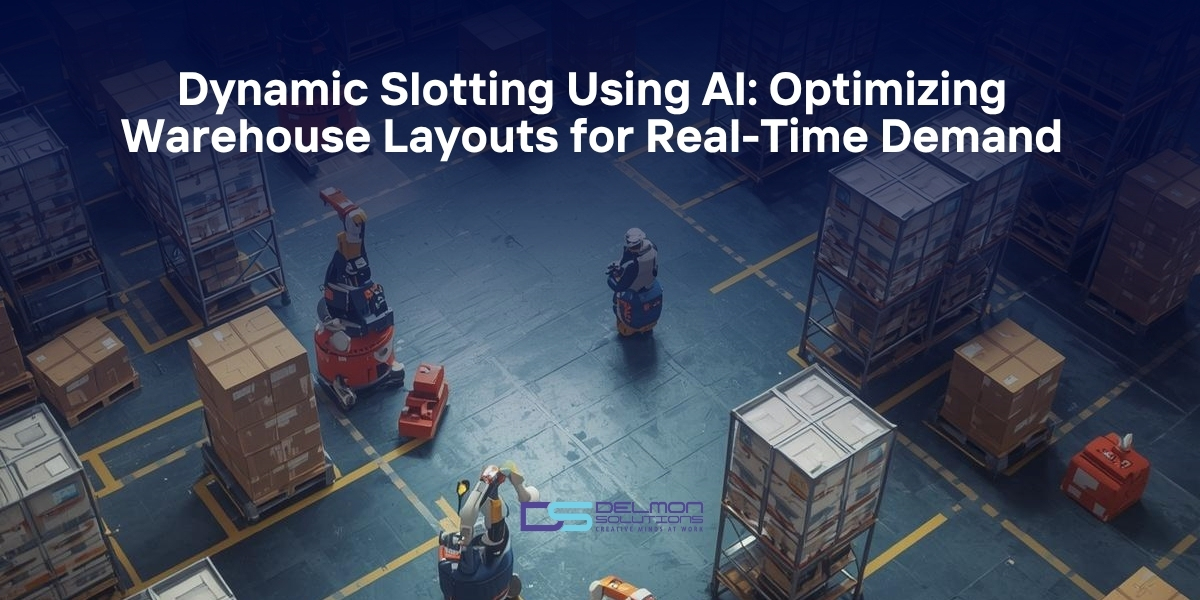
Dynamic slotting is an AI-driven warehouse optimization approach that continuously adjusts product placement based on real-time demand, order patterns, and operational conditions.
It uses:
- Machine learning models to analyze SKU velocity and demand trends
- Order pattern intelligence to group frequently picked items
- Real-time operational data to adapt to changing warehouse conditions
- Optimization algorithms to minimize travel time and improve picking efficiency
The result is a self-adjusting warehouse layout that improves speed, accuracy, and throughput without manual intervention.
In other words:
Dynamic slotting refers to the continuous optimization of product placement within a warehouse using AI and real-time data inputs. Unlike traditional slotting approaches which rely on periodic manual reconfiguration—AI-driven slotting systems:
- Continuously analyze SKU behavior
- Adjust placement based on demand patterns
- Optimize for speed, accessibility, and efficiency
According to Mecalux, optimized slotting strategies can reduce picking travel time by up to 50%, making it one of the most impactful levers in warehouse performance.
Why traditional slotting approaches are no longer sufficient
Traditional slotting models operate under a critical assumption: stability.
In reality, modern warehouses face:
- High SKU variability
- Seasonal and unpredictable demand
- Multi-channel fulfillment complexity
The gap between static design and dynamic demand leads to measurable inefficiencies:
| Constraint in Traditional Slotting | Operational Impact |
| Fixed SKU locations | Increased travel time |
| Periodic updates (monthly/quarterly) | Delayed response to demand shifts |
| Limited data inputs | Suboptimal placement decisions |
| Manual intervention | Operational disruption |
As order complexity increases, these inefficiencies compound.
How AI enables dynamic warehouse layout optimization
1. Demand-aware SKU positioning
AI models continuously evaluate SKU velocity and demand frequency. High-moving products are automatically repositioned closer to:
- Packing stations
- Dispatch zones
- High-access areas
This reduces travel distance and improves picking efficiency.
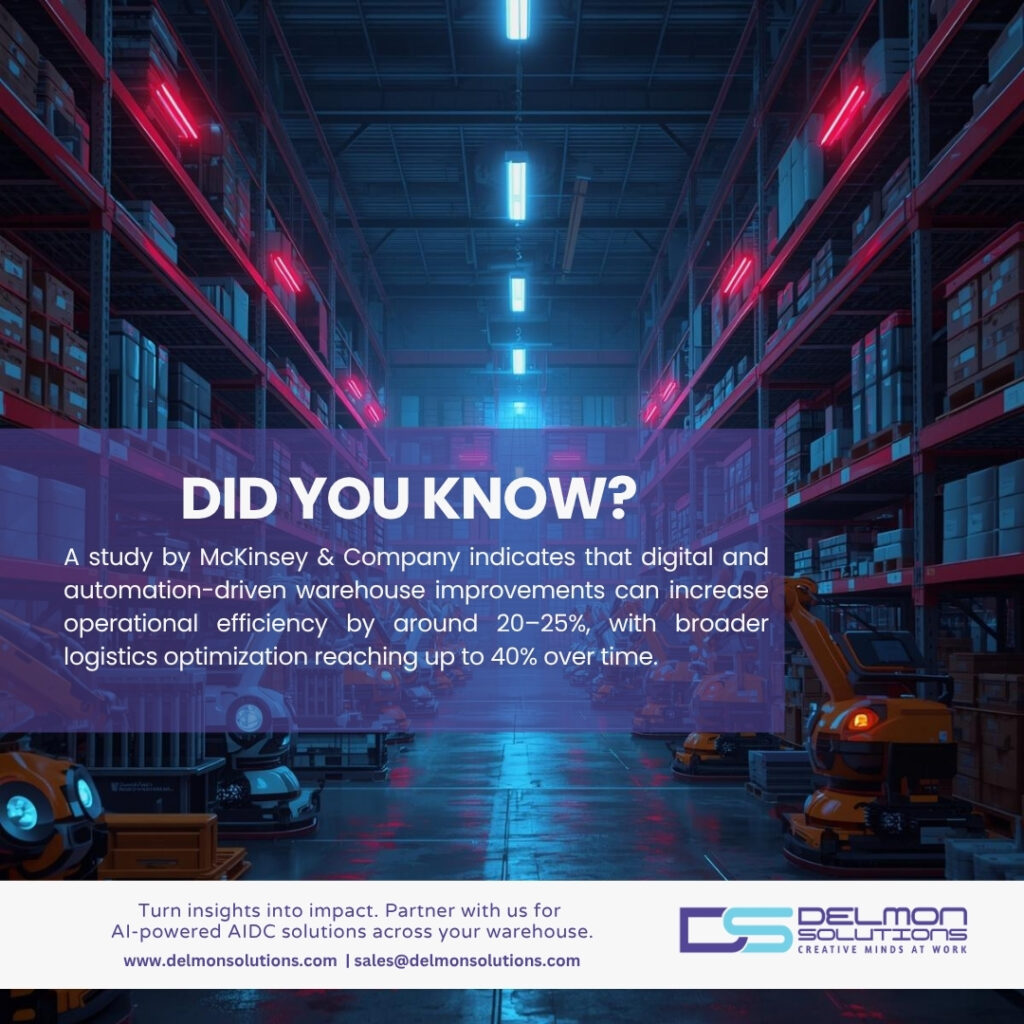
A study by McKinsey & Company indicates that digital and automation-driven warehouse improvements can increase operational efficiency by around 20–25%, with broader logistics optimization reaching up to 40% over time.
2. Order pattern intelligence (beyond SKU-level thinking)
Traditional slotting focuses on individual SKU movement. AI expands this by identifying:
- Frequently co-ordered items
- Sequential picking patterns
- Order clustering behavior
This enables group-based slotting, reducing unnecessary movement between zones.
The result is not just faster picking—but more coherent workflow execution.
3. Real-time travel path optimization
Industry benchmarks suggest that 50–60% of picking time is spent walking, not handling items.
AI-driven slotting reduces this by:
- Reorganizing layouts dynamically
- Aligning SKU placement with actual movement patterns
This creates measurable improvements in:
- Throughput
- Labor productivity
- Order cycle time
4. Congestion-aware layout adjustments
High-volume warehouses often experience localized congestion:
- Popular SKU zones
- Peak picking hours
- Bottlenecks near dispatch areas
AI systems detect these patterns and:
- Redistribute SKU placements
- Balance workload across zones
This ensures smoother operations, especially during peak demand cycles.
Quantifying the impact of AI-based dynamic slotting
The value of dynamic slotting is best understood through operational metrics:
| Performance Metric | Impact with AI Dynamic Slotting |
| Picking travel time | Reduced by 30–50% |
| Order fulfillment speed | Increased by 20–40% |
| Labor efficiency | Improved by 15–30% |
| Space utilization | Improved by 10–20% |
| Operational bottlenecks | Significantly reduced |
These improvements are supported by industry findings from organizations like Grand View Research, which highlights rapid growth in AI adoption across warehousing driven by efficiency gains.
AI in Warehouses Implementation considerations: where most organizations struggle
Despite clear benefits, dynamic slotting initiatives often underperform due to:
- Fragmented data systems
- Lack of real-time visibility
- Poor integration between WMS and execution layers
- Treating slotting as a one-time project
Dynamic slotting is not a feature—it is a continuous capability.
Successful implementations require:
- Integrated data pipelines
- Edge-enabled execution systems
- Alignment between software intelligence and physical operations
FAQs: Dynamic Slotting Using AI in Warehousing
What is dynamic slotting in warehouse management?
Dynamic slotting is the AI-driven process of continuously adjusting product placement based on real-time demand and operational data.
How does AI improve warehouse layout efficiency?
AI analyzes SKU movement, order patterns, and operational flow to optimize placement, reducing travel time and improving picking speed.
What is the difference between static and dynamic slotting?
Static slotting is periodic and manual, while dynamic slotting is continuous, automated, and adaptive.
Is dynamic slotting suitable for existing warehouses?
Yes. Most solutions can be implemented within existing infrastructure, especially when integrated with modern WMS platforms.
What ROI can businesses expect from AI-driven slotting?
Organizations typically see improvements in:
- Labor productivity
- Order fulfillment speed
- Operational cost reduction
As a leading AIDC solutions provider in India, we help businesses implement end-to-end warehousing solutions across both hardware and software. Contact us to build intelligent, AI-driven warehouse operations tailored to your needs.