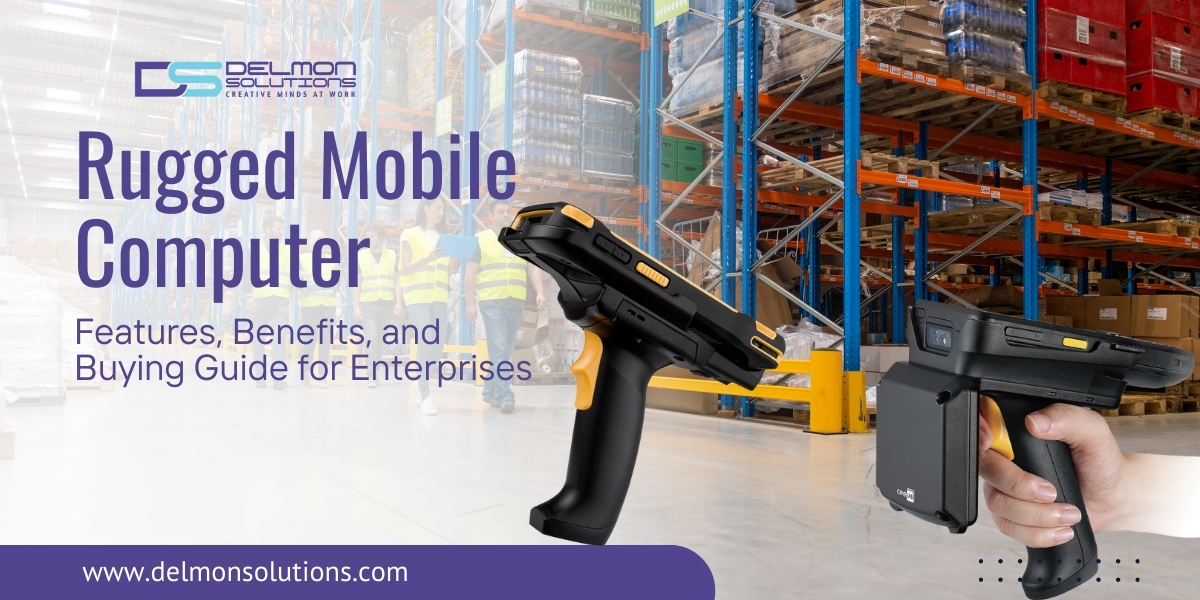
In logistics networks, manufacturing plants, warehouses, and e-commerce fulfillment centers, operational execution depends on how efficiently data is captured and processed at the point of work. Inventory movements, production tracking, order picking, and dispatch accuracy are all driven by frontline systems. Over the last decade, the rugged mobile computer has become a core operational tool in these environments because it is built to function where consumer devices consistently fail.
This article explains rugged mobile computers from an operational and commercial standpoint. It outlines how these devices are used across key industries, what separates them from consumer hardware, and what decision-makers should assess before deployment.
What a Rugged Mobile Computer Is Designed to Do
A rugged mobile computer is an industrial-grade handheld computing device designed for continuous use in physically demanding environments. It combines processing capability, barcode scanning, wireless communication, and enterprise software compatibility into a single unit.
Unlike consumer smartphones, these devices are engineered for repeated drops, dust exposure, moisture, vibration, temperature variation, and long operating hours. They are built for multi-year deployment cycles and predictable performance rather than short-term replacement.
For organizations running high-volume physical operations, a rugged mobile computer functions as operational infrastructure rather than end-user electronics.

Rugged Handheld in Logistics Operations
Logistics operations require uninterrupted visibility across inbound, internal movement, and outbound activities. Every scan impacts shipment accuracy, delivery timelines, and reconciliation.
A rugged handheld is commonly used for:
- Inbound shipment receiving and verification
- Sorting and cross-docking operations
- Load planning and dispatch confirmation
- Proof of delivery and returns processing
These environments place devices under constant physical stress. Drops are routine. Exposure to rain, heat, and dust is unavoidable. Devices are often used outdoors and across extended shifts. Rugged handheld devices are sealed, reinforced, and designed to operate reliably under these conditions.
Battery endurance is a primary requirement. Logistics workflows cannot accommodate frequent charging interruptions. Devices with high-capacity or hot-swappable batteries allow operations to continue without disruption, particularly during peak delivery windows.
Rugged Handheld Computer on the Manufacturing Floor
Manufacturing environments demand consistency and traceability. Data captured on the shop floor feeds planning systems, quality processes, and compliance reporting.
A rugged handheld computer supports:
- Work-in-progress tracking
- Raw material issue and consumption logging
- Quality inspections and non-conformance reporting
- Asset, tool, and maintenance tracking
Manufacturing floors expose devices to vibration, heat, and mechanical interference. Touch-only consumer devices are often impractical. Rugged handheld computers typically include physical keypads, trigger-based scanning, and industrial-grade touchscreens that remain responsive even with gloves or contaminated surfaces.
Integration with ERP and MES platforms is standard in manufacturing deployments. These devices are managed centrally, secured through enterprise policies, and supported over long hardware lifecycles to avoid disruption caused by frequent model changes.
Rugged Handheld in Warehousing and Distribution Centers
Warehouse performance is measured by speed, accuracy, and inventory visibility. Errors in picking or put-away create downstream delays and financial leakage.
A rugged handheld is used for:
- Inbound put-away and location assignment
- Order picking and packing
- Cycle counts and physical audits
- Inventory movement and slotting control
Warehouse environments are unforgiving. Devices are used continuously, passed between shifts, and frequently dropped from height. Scanning accuracy directly impacts throughput, particularly in high-rack or low-light conditions.
Rugged handheld systems are designed to support accessories such as pistol grips, vehicle mounts, and multi-slot charging cradles. This modularity allows a single device platform to support multiple workflows without replacement.
Rugged Handheld Computer in E-commerce Fulfillment
E-commerce fulfillment combines warehouse discipline with high volatility. Order volumes fluctuate sharply, and service-level expectations are unforgiving.
A rugged handheld computer is used for:
- High-speed order picking
- Real-time inventory synchronization
- Returns and reverse logistics
- Multi-channel fulfillment workflows
During peak sales periods, device reliability becomes critical. A single device failure can cascade into delayed dispatches and missed delivery commitments. Rugged handheld computers are selected in e-commerce environments for predictable uptime and rapid redeployment.
Android-based platforms are increasingly common due to application flexibility and faster onboarding of temporary workforce. Even so, durability, scanning performance, and battery life remain non-negotiable requirements.
Key Features of a Rugged Handheld Computer
Specifications should always be evaluated in the context of operational impact rather than datasheets alone.
Durability and Environmental Protection
Ingress protection ratings indicate resistance to dust and water. Military-grade drop and shock standards indicate survivability in real-world handling.
Scanning Capability
Integrated scanners must reliably read damaged, poorly printed, or low-contrast barcodes. Scan speed affects throughput directly.
Battery Performance
Devices should last a full shift under continuous scanning and data transmission. Hot-swappable batteries reduce downtime in extended operations.
Connectivity
Stable Wi-Fi, Bluetooth, and optional cellular support ensure real-time data availability across facilities and transport routes.
Operating System and Lifecycle Support
Long-term OS support, security updates, and predictable hardware availability are essential for enterprise deployments.
Ergonomics and Usability
Weight distribution, grip design, and physical button placement affect user efficiency and fatigue over long shifts.
Buying Considerations for Enterprises
Procurement decisions should be grounded in operational reality rather than unit cost.
Total Cost of Ownership
Lower-priced devices often result in higher replacement rates, downtime, and support overhead. Rugged handheld computers typically deliver lower total cost over five to seven years.
Vendor and Partner Reliability
Enterprises require consistent supply, spare parts availability, and local technical support. Hardware discontinuation can disrupt standardized workflows.
Software and System Compatibility
Devices must integrate seamlessly with existing WMS, ERP, and inventory platforms. Device management and security tools are critical.
Scalability and Flexibility
Operations evolve. Hardware platforms should support additional applications, peripherals, and workflow changes without forcing replacement.
A rugged mobile computer is not an IT accessory. It is a frontline operational asset. In logistics, manufacturing, warehousing, and e-commerce environments, device reliability directly affects productivity, accuracy, and service levels.
Organizations that treat hardware selection as a strategic decision rather than a procurement exercise are better positioned to scale without operational friction.
About Delmon Solutions
Founded in 2009 and headquartered in Pune, India, Delmon Solutions is a trusted provider of industry-specific software and hardware solutions. We specialize in inventory and asset management for logistics, manufacturing, warehousing, and e-commerce companies.
Our offerings include rugged mobile computers, industrial printers, barcode scanners, inventory tracking systems, warehouse management systems, and barcode scanners and printers. We work with proven technology partners such as CipherLab and TSC to deliver dependable, production-ready solutions.
If your operations require reliable data capture, consistent uptime, and scalable systems, Delmon Solutions can support you from evaluation through deployment and long-term support. Contact us today.