Logistics has always been about movement. What has changed is the amount of information that must move with the goods.
A shipment is no longer simply received, stored and dispatched. Businesses need to know where it is, what has been scanned, whether the correct item was picked, whether inventory is accurate and whether an exception requires immediate action.
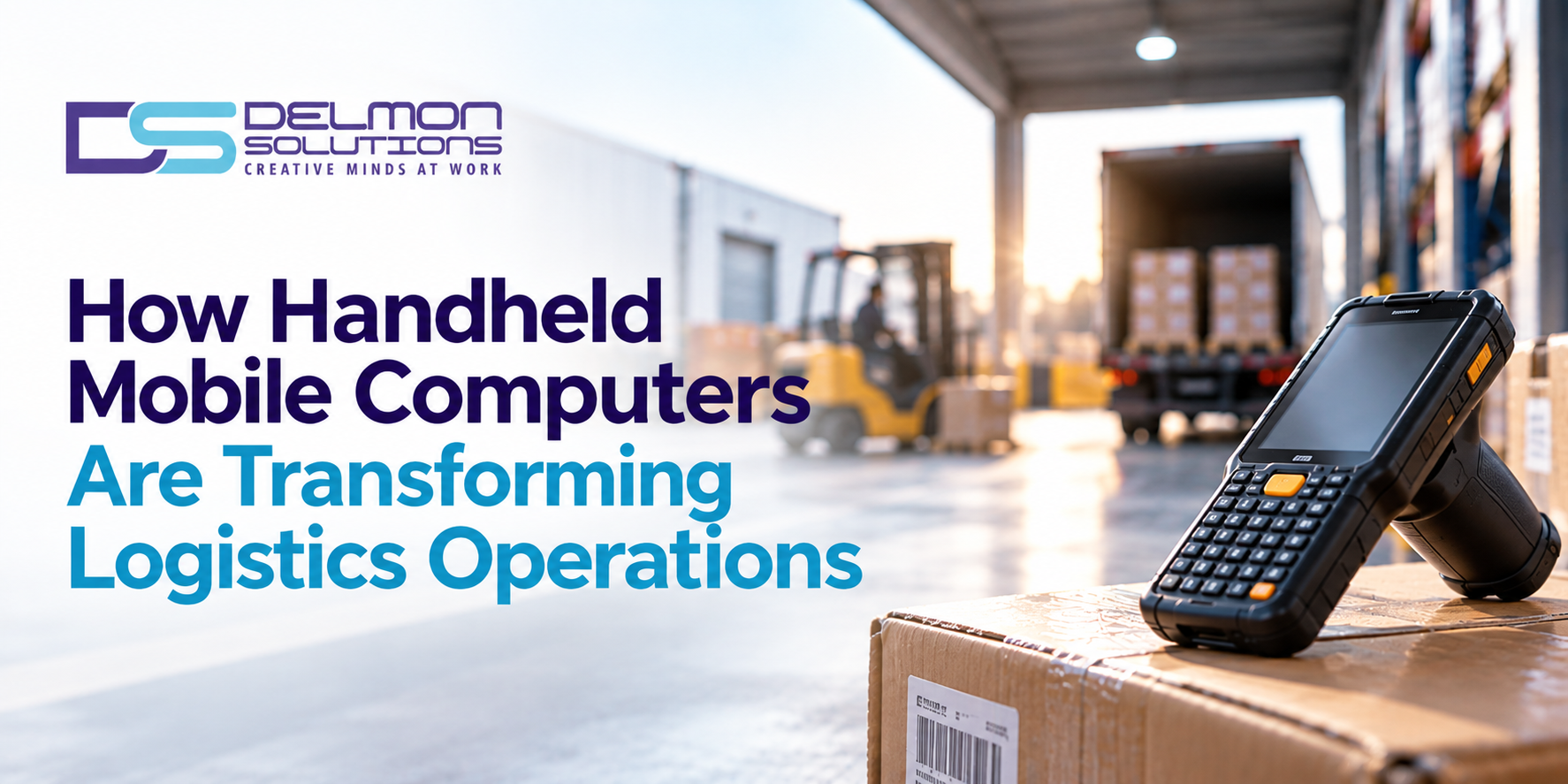
This is where handheld mobile computers have become an important part of modern logistics infrastructure.
The value of these devices is not simply that they replace paper. Their real value is that they connect frontline activity with the digital systems responsible for inventory, warehouse execution, order fulfilment and logistics visibility.
Why Handheld Mobile Computers Matter in Modern Logistics
A handheld mobile computer is an enterprise-grade mobile device designed to give workers access to applications and data while they perform operational tasks. Depending on the model and application, these devices can support barcode scanning, RFID, wireless connectivity, inventory management and integration with warehouse or enterprise systems.
In logistics and warehousing, typical applications include:
- Goods receiving and verification
- Putaway and inventory movement
- Order picking
- Packing and dispatch
- Cycle counting
- Shipment verification
- Returns processing
- Asset tracking
- Field inventory operations
The broader shift toward warehouse mobility is being driven by a simple requirement: operational data has to be captured where the work happens.
AIM’s latest analysis of mobility and AIDC in warehouse execution highlights the role of barcodes, 2D codes, RFID, rugged mobile devices, wearables, machine vision, real-time location systems and sensors across receiving, putaway, picking, packing, shipping, cycle counting and returns.
That is an important distinction. The handheld device is not the transformation by itself. It is part of the infrastructure that connects the physical warehouse to its digital systems.
India’s Logistics Infrastructure Is Becoming More Technology-Intensive
The Indian logistics market provides a strong reason for this shift.
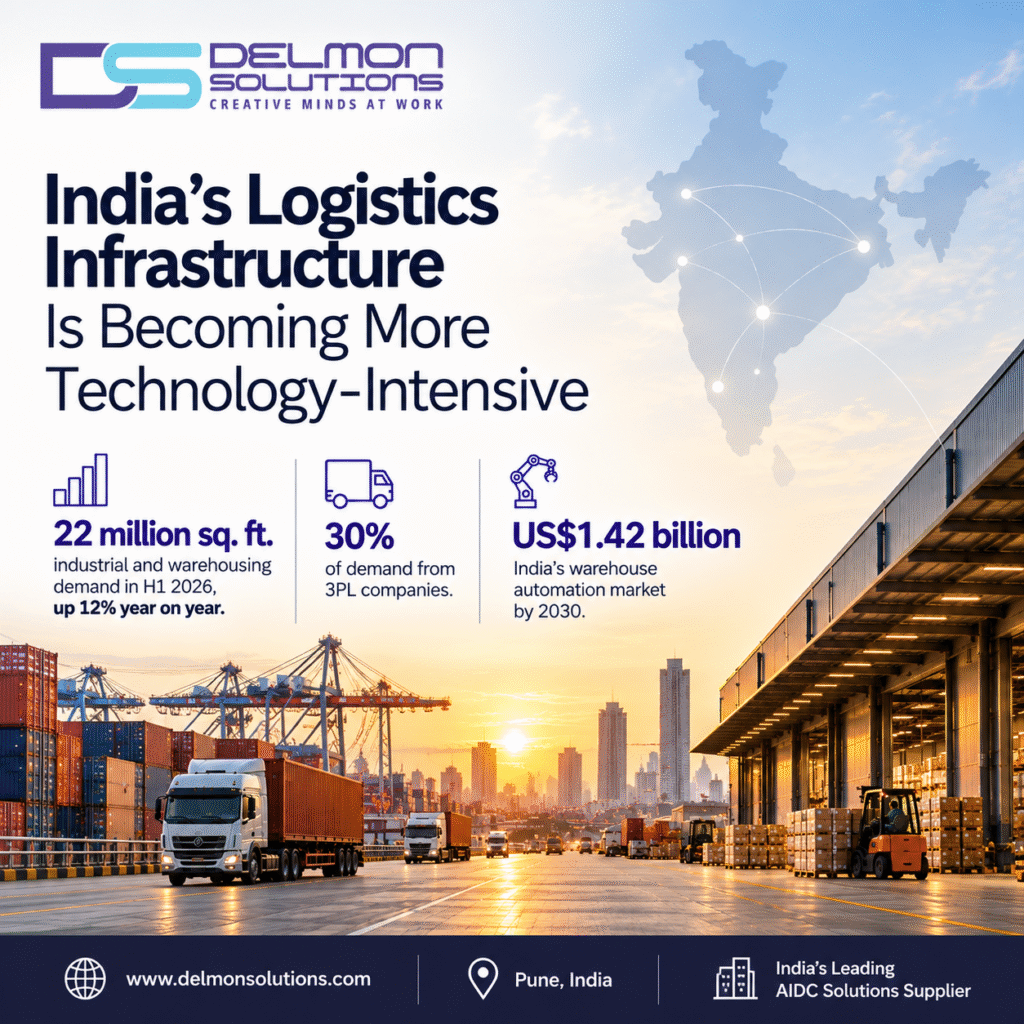
Colliers reported that industrial and warehousing demand across India’s top eight cities reached approximately 22 million sq. ft. in H1 2026, up 12% year on year. 3PL companies accounted for 30% of demand, while Delhi-NCR and Chennai together represented more than 45% of leasing activity. Pune and Bengaluru also recorded more than 2 million sq. ft. of Grade A uptake each.
CBRE’s H1 2026 snapshot similarly identified 3PL, engineering and manufacturing, and e-commerce as leading demand drivers, with 3PL accounting for 31% of absorption.
This expansion has implications beyond warehouse capacity.
As operations become larger and more distributed, manual data capture becomes increasingly difficult to control. Businesses need reliable identification, faster transactions and better visibility across every stage of the movement.
CBRE also projects India’s warehouse automation market to reach US$1.42 billion by 2030, reflecting the broader movement toward technology-driven logistics infrastructure.
Handheld Computing Is Becoming Part of a Larger AIDC Ecosystem
The next stage of logistics technology will not be defined by one device or one technology.
Barcode scanners will continue to play an important role. RFID can provide identification without requiring direct line of sight. Wearable devices can support hands-free workflows. Sensors and machine vision can generate additional operational data.
Handheld mobile computers sit within this larger ecosystem.
| FAQ | Answers from our experts |
| What is a handheld mobile computer? | An enterprise mobile computing device used to capture and access operational data while workers perform logistics, warehouse or field tasks. |
| Where are handheld mobile computers used? | Receiving, inventory, picking, packing, dispatch, cycle counting, returns, asset tracking and field operations. |
| What are the benefits? | Faster data capture, improved inventory accuracy, reduced manual entry and better operational visibility. |
| Can handheld computers integrate with WMS and ERP systems? | Yes. Enterprise mobile computers can be integrated with warehouse management, ERP and other operational applications. |
| What should businesses consider before buying? | Scanning requirements, ruggedness, battery life, connectivity, ergonomics, operating environment, software compatibility and lifecycle support. |
The objective is not to capture more data for its own sake.
It is to capture trusted data that can trigger the right operational action.
What the Next Decade Could Look Like
The latest DHL Logistics Trend Radar 8.0, released in September 2026, identifies the technological, business and societal trends expected to shape logistics over the next decade. Its most significant developments include Agentic AI, AI Analytics, augmented workplaces, cybersecurity and supply chain diversification.
This points toward an important evolution.
Today’s handheld computer primarily helps a worker capture and access information.
Tomorrow’s connected operational environment will increasingly use that information to identify exceptions, support decisions and coordinate actions.
I do not believe this means the frontline worker becomes less important.
DHL’s latest research makes the opposite point: AI, robotics, wearable technologies and other digital tools are expected to augment workers, while organisations will need to invest in skills, training and employee experience.
The opportunity, therefore, is not human versus technology.
It is better technology supporting better human decisions.
Choosing the Right Handheld Mobile Computer
For a logistics company in India, selecting a handheld mobile computer should begin with the workflow rather than the specification sheet.
Consider:
- Barcode types and scanning distance
- Required level of ruggedness
- Battery requirements for full-shift operations
- Wi-Fi and cellular connectivity
- Screen and keyboard requirements
- RFID requirements
- WMS and ERP compatibility
- Device management
- Worker ergonomics
- Availability of service and lifecycle support
A device used in a high-volume distribution centre may have very different requirements from one used by a field delivery team.
That is why AIDC solution selection should be operationally driven.
Building the Connected Logistics Operation
At Delmon Solutions, we see mobile computing as one component of a broader AIDC architecture.
As India’s Leading AIDC Solutions supplier, Delmon Solutions Pvt. Ltd. provides technology across mobile computers, barcode scanners, RFID, barcode printers and warehouse management solutions. The company’s current portfolio is designed around inventory, asset management and connected operational workflows across logistics, warehousing, manufacturing, retail and distribution.
Our role is not simply to supply a device.
It is to understand the operational requirement, identify the appropriate AIDC technology and help businesses build a system that can support accuracy, traceability and execution at scale.
The future of logistics will be increasingly connected.
Every scan, RFID read, transaction and movement can become part of a larger operational picture.
The organisations that benefit most will be those that connect that data to action.
If you are evaluating handheld mobile computers, rugged mobile computers, barcode scanning solutions, RFID systems or warehouse mobility solutions in India, speak with our team about the right AIDC architecture for your operation.
Delmon Solutions Pvt. Ltd.
India’s Leading AIDC Solutions Supplier
C207, Teerth Technospace IT Park, Baner, Pune, Maharashtra, India
Email: sales@delmonsolutions.com
Phone: +91 99605 76576