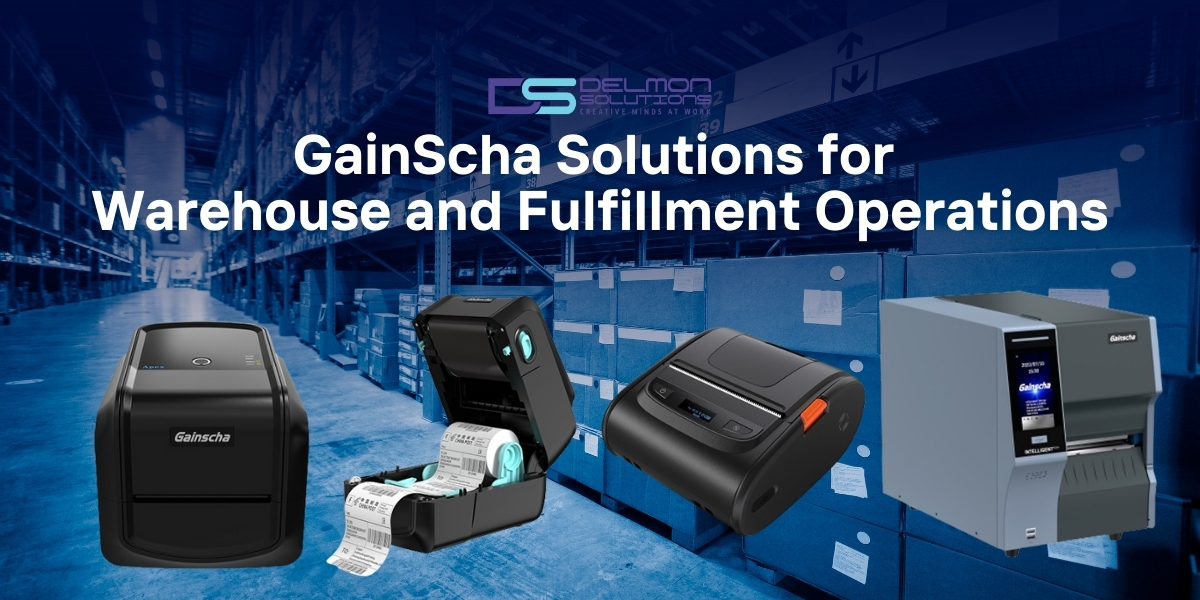
Modern warehousing, manufacturing, and e-commerce fulfillment environments operate under conditions of high transaction density, compressed dispatch timelines, and strict accuracy requirements. Under such constraints, operational efficiency depends not only on software systems such as Warehouse Management Systems (WMS) or Enterprise Resource Planning (ERP), but equally on the reliability of physical identification mechanisms.
Every material movement, whether inbound, in-process, or outbound, must be accompanied by an accurate and machine-readable identifier. Consequently, barcode and RFID labeling systems form a foundational layer of the overall execution architecture.
Failure at this layer produces measurable degradation in throughput, accuracy, and traceability.
For this reason, industrial-grade printing systems such as GainScha solutions are deployed as core operational infrastructure rather than optional peripherals.
Role of Identification in Operations Engineering
In material handling systems, identification performs three primary functions:
- Verification of item correctness
- Recording of transactional movement
- Enabling system-level visibility
These functions are implemented through barcodes or RFID tags applied at multiple stages of the workflow.
If identification is delayed or inaccurate, the following consequences occur:
- Increased manual intervention
- Rework and relabeling
- Dispatch delays
- Inventory discrepancies
- Reduced system reliability
From an engineering perspective, these effects represent process inefficiencies introduced at the lowest level of execution.
Therefore, the printing subsystem must satisfy the following design criteria:
- High speed
- High print clarity
- Continuous duty capability
- Minimal operator intervention
- Compatibility with multiple control systems
Printing System Categories and Functional Characteristics
To meet varying operational requirements, labeling infrastructure is typically divided into four categories: desktop, RFID-enabled, industrial, and mobile systems. Each category addresses a specific load condition and workflow.
Desktop Barcode Printers
Desktop printers are intended for moderate volume labeling tasks located close to the point of activity.
Typical applications include:
- Packing stations
- Retail POS labeling
- Shipping documentation
- Healthcare sample labeling
Functional characteristics:
- Compact footprint
- Thermal transfer and direct thermal modes
- Resolutions up to 600 DPI
- Speeds up to 8 inches per second
- Multi-interface connectivity
These systems reduce unnecessary operator movement by enabling localized printing.
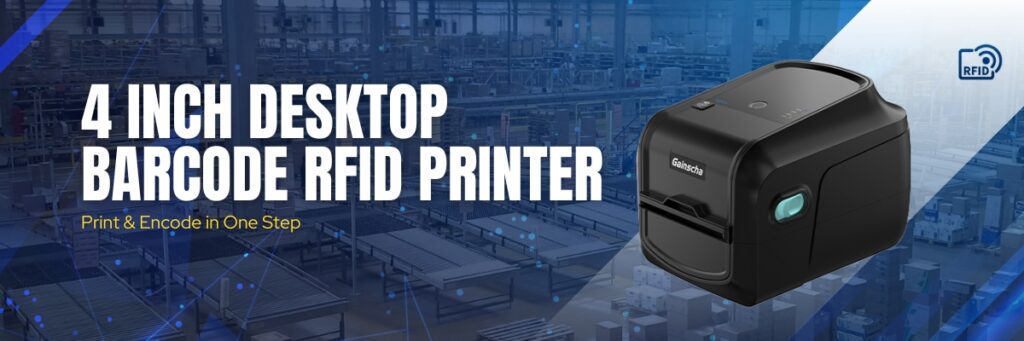
RFID Desktop Printers
RFID printers combine label printing with simultaneous tag encoding.
This architecture eliminates the need for separate encoding steps and ensures each label is both printed and programmed within a single pass.
Typical applications include:
- Asset tracking
- High-value inventory control
- Compliance labeling
- Automated stock counting
Functional characteristics:
- UHF EPC Class1 Gen2 / ISO18000-6C compatibility
- Print-and-encode capability
- Label verification mechanisms
- Support for specialty and anti-metal tags
The primary benefit is improved traceability with reduced handling time.
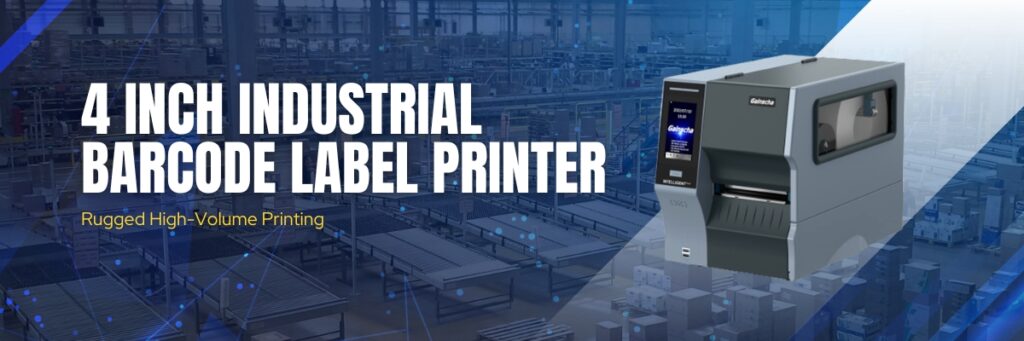
Industrial Barcode Printers
Industrial printers are designed for sustained, high-duty-cycle environments.
Typical applications include:
- Pallet labeling
- Carton labeling
- Production lines
- Distribution centers
Functional characteristics:
- Rugged mechanical construction
- Extended media capacity
- Long continuous print lengths
- Network-based deployment
- Reliable 24/7 operation
These systems are optimized for throughput and durability rather than portability.
Mobile Barcode Printers
Mobile printers extend printing capability to the point of execution.
Typical applications include:
- Receiving docks
- Field logistics
- Transportation
- Last-mile delivery
- On-site verification
Functional characteristics:
- Battery powered
- Lightweight form factor
- Bluetooth and Wi-Fi connectivity
- Dual receipt and label support
These devices eliminate walk-backs and reduce process latency.

Application by Industry
Warehousing and Distribution
Requirements:
- High-volume carton labeling
- Fast dispatch cycles
- Real-time inventory accuracy
Implementation:
- Desktop printers at packing tables
- Industrial printers for pallet and bulk labeling
- RFID systems for asset and location tracking
Result:
- Reduced queue times
- Higher throughput
- Lower error rates
Manufacturing
Requirements:
- Work-in-progress traceability
- Durable labels
- Continuous printing during production
Implementation:
- Industrial printers integrated with production systems
- High-resolution labeling for small components
Result:
- Improved batch control
- Regulatory compliance
- Reduced production disruption
E-Commerce Fulfillment
Requirements:
- Rapid order processing
- High order accuracy
- Short dispatch windows
Implementation:
- Desktop printers at each packing station
- RFID tagging for fast-moving inventory
- Mobile printers for returns and staging
Result:
- Faster label generation
- Fewer reprints
- Higher same-day shipping capability
Logistics and Transportation
Requirements:
- On-site labeling
- Flexible mobility
- Immediate documentation
Implementation:
- Mobile printers for drivers and field operators
Result:
- Reduced paperwork delays
- Improved delivery confirmation
System-Level Benefits
When properly deployed, GainScha printing systems contribute to measurable operational improvements:
- Increased labeling speed
- Reduction in scanning failures
- Lower downtime
- Higher inventory accuracy
- Reduced manual effort
- Improved fulfillment consistency
From an engineering standpoint, these gains represent increased process stability and reduced variance.
Conclusion
In high-volume operational environments, performance is determined by the reliability of foundational systems rather than isolated upgrades. Barcode and RFID printing constitute one such foundation.
A well-designed identification infrastructure ensures that materials flow without interruption, data remains accurate, and scale can be achieved without proportional increases in labor.
Accordingly, organizations seeking to modernize warehousing, manufacturing, or e-commerce operations should treat printing and labeling systems as core infrastructure investments rather than auxiliary equipment.
Send your inquiry for Gainscha products
We are a leading AIDC solution provider in India, delivering end-to-end GainScha barcode, RFID, industrial, and mobile printing solutions.
Connect with us at sales@delmonsolutions.com to design and deploy the right identification infrastructure for your operations. Send your message.