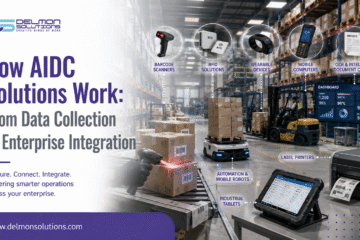
Warehousing has moved well beyond storage. It is now a control point for cost, speed, and service levels. A warehouse management system has become a core operational system for organizations that need accuracy, visibility, and predictable execution.
This article looks at warehouse management systems from an operational perspective. It explains how these systems function in real environments, how supporting systems fit together, and what decision-makers should evaluate before implementation. The focus is on warehouses supporting logistics, manufacturing, and e-commerce operations, including organizations transitioning from basic setups to structured systems.
What a Warehouse Management System Actually Does
A warehouse management system, commonly referred to as WMS, is software that controls and optimizes warehouse operations from inbound receipt to outbound dispatch. Its role is to ensure that inventory is visible, movements are recorded, and tasks are executed in a defined sequence.
At a basic level, a warehouse management system manages:
- Inbound receiving and verification
- Put-away and location control
- Picking, packing, and dispatch
- Inventory accuracy and audits
In more mature environments, it also supports labor planning, slotting strategies, order prioritization, and system-driven workflows. The value of a WMS is not in dashboards or reports. It is in enforcing discipline on the floor.

Warehouse Inventory Systems and Their Role
Warehouse inventory systems form the foundation of any WMS deployment. Without reliable inventory data, higher-level workflows break down quickly.
Warehouse inventory systems are responsible for:
- Maintaining real-time stock levels
- Tracking inventory by location, batch, or serial number
- Managing stock status such as available, damaged, or reserved
- Supporting cycle counts and physical audits
In many warehouses, inventory discrepancies originate from manual entries or delayed updates. A structured inventory system reduces these gaps by enforcing scan-based transactions and system validations.
For manufacturing-linked warehouses, inventory systems also support raw material tracking, work-in-progress visibility, and finished goods reconciliation. In e-commerce environments, they enable accurate available-to-promise calculations across multiple sales channels.
Warehouse Management System for Small Business Operations
A warehouse management system for small business operations is often misunderstood. Smaller warehouses assume that WMS platforms are complex, expensive, or suited only for large distribution centers. In practice, the absence of a WMS often costs small businesses more through errors, delays, and rework.
For small and mid-sized warehouses, a WMS typically focuses on:
- Structured inbound and outbound processes
- Location-based inventory visibility
- Barcode-driven picking and packing
- Basic reporting and stock accuracy
The key requirement is scalability. A warehouse management system for small business should support current volumes while allowing expansion without reimplementation. Systems that are modular and configurable tend to perform better than heavily customized solutions.
Ease of use is another factor. Smaller operations often have lean teams. The system must reduce dependency on individual operators rather than increase it.
Warehouse Barcode System as an Execution Layer
A warehouse barcode system is not a standalone solution. It is the execution layer that connects physical movement to the warehouse management system.
Barcode systems enable:
- Scan-based receiving and put-away
- Location confirmation during picking
- Pack validation before dispatch
- Error prevention through system checks
Barcodes enforce process compliance. When every movement requires a scan, undocumented actions reduce significantly. This is particularly important in high-volume environments where speed often competes with accuracy.
The effectiveness of a warehouse barcode system depends on hardware reliability and system integration. Scanners, mobile computers, and industrial printers must operate consistently across shifts. Barcode quality, label placement, and scanning ergonomics all influence throughput.
Warehouse Tracking System and Operational Visibility
A warehouse tracking system provides visibility into inventory movement, task status, and order progress. It answers operational questions in real time.
Common tracking requirements include:
- Where is a specific SKU right now
- Which orders are pending, picked, or dispatched
- What tasks are in progress on the floor
- Where bottlenecks are forming
In traditional setups, this information is reconstructed after the fact. A warehouse tracking system makes it available as operations happen. This allows supervisors to intervene early rather than respond to exceptions later.
For logistics-linked warehouses, tracking systems also support cross-docking, staging control, and dispatch sequencing. In e-commerce fulfillment, they help manage wave picking, batch processing, and returns flow.
Warehouse Inventory Tracking System for Accuracy and Control
A warehouse inventory tracking system focuses specifically on the movement and status of inventory over time. While inventory systems maintain stock levels, tracking systems maintain traceability.
A warehouse inventory tracking system supports:
- Location-level movement history
- Batch, lot, and serial tracking
- Expiry and compliance tracking
- Audit trails for reconciliation
This level of tracking is essential in regulated industries, manufacturing environments, and high-value inventory operations. It also plays a role in root cause analysis when discrepancies arise.
Inventory tracking systems reduce dependence on manual audits by ensuring that every movement is recorded at the time it occurs. Over time, this leads to higher inventory confidence and reduced write-offs.
How WMS Work Together
A warehouse management system does not operate in isolation. It acts as the central control layer, supported by inventory systems, barcode execution, and tracking modules.
In a typical setup:
- The warehouse management system defines workflows
- Warehouse inventory systems maintain stock accuracy
- The warehouse barcode system captures physical actions
- The warehouse tracking system provides real-time visibility
- The warehouse inventory tracking system ensures traceability
When these components are aligned, warehouses operate with fewer exceptions and less manual intervention. When they are disconnected, errors accumulate quietly until they become operational issues.

Buying Considerations for Decision-Makers
Selecting a warehouse management system is an operational decision, not just a software purchase. Key factors to evaluate include:
Process Fit
The system should support your current workflows while enforcing best practices. Excessive customization often increases long-term risk.
Integration Capability
WMS platforms must integrate with ERP systems, order management platforms, and transport systems without complex workarounds.
Barcode and Hardware Compatibility
The system should work reliably with industrial barcode scanners, mobile computers, and printers.
Scalability
Volume growth, additional warehouses, and new sales channels should not require system replacement.
Support and Longevity
Local support, upgrade paths, and vendor stability matter more than feature lists.
Warehousing performance is defined by execution discipline. A warehouse management system provides that discipline by structuring tasks, enforcing accuracy, and maintaining visibility.
For logistics providers, manufacturers, warehouse operators, and e-commerce companies, the absence of a reliable WMS often becomes visible only when volumes increase or errors multiply. Implementing the right system earlier creates operational resilience rather than reactive fixes later.
About Delmon Solutions
Founded in 2009 and headquartered in Pune, India, Delmon Solutions is a trusted provider of industry-specific software and hardware solutions. We specialize in inventory and asset management for warehouses, logistics providers, manufacturing units, and e-commerce companies.

Our offerings include warehouse management systems, inventory tracking systems, warehouse barcode systems, rugged mobile computers, industrial printers, and barcode scanners and printers. We work with established technology partners to deliver reliable, production-ready solutions aligned to real operational requirements.
If your warehouse operations require higher accuracy, better visibility, and scalable systems, Delmon Solutions can support you from system selection through deployment and long-term optimization. Send your inquiry.